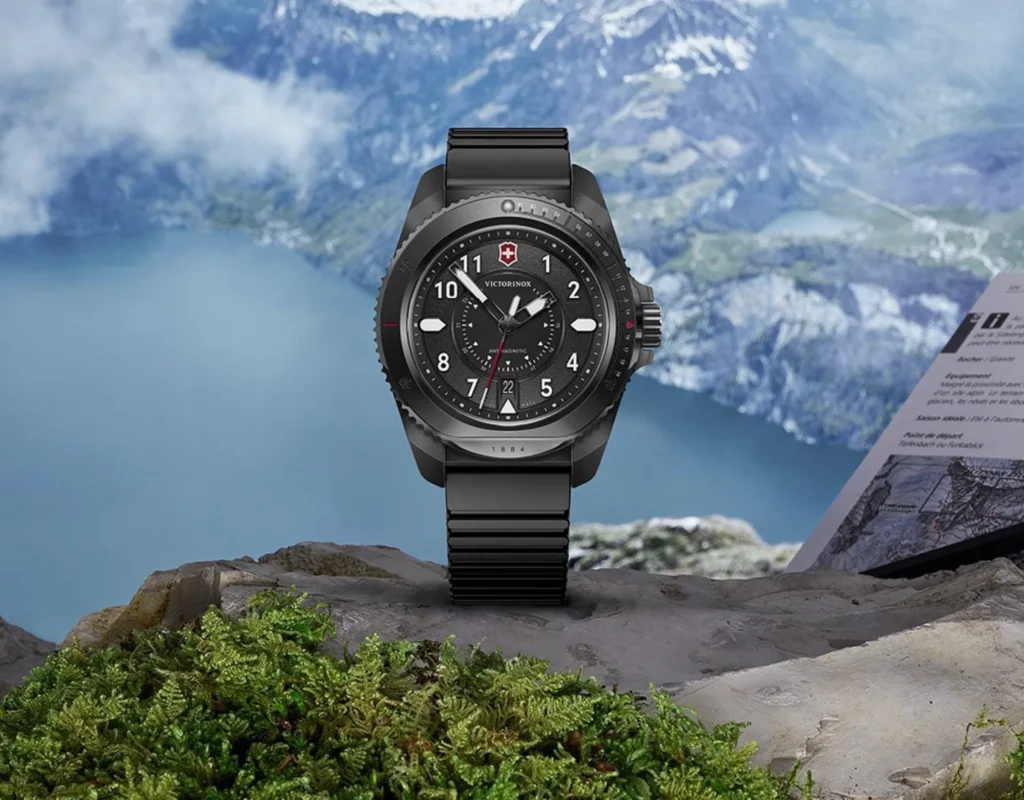
In the vast and intricate world of horology, the debate between mechanical and quartz watches has long captivated enthusiasts.1 While mechanical timepieces are revered for their artistry and tradition, there is a compelling case to be made for the modern marvel of the Swiss quartz movement watches. These timepieces blend the legendary Swiss commitment to quality with the accuracy and practicality of quartz technology, offering a perfect fusion of heritage and innovation.2
A quartz movement operates by sending an electrical current from a battery through a small quartz crystal.3 This crystal, when electrified, vibrates at an incredibly precise frequency—typically 32,768 times per second.4 An integrated circuit counts these vibrations and translates them into a single, precise pulse every second, which drives a small motor to move the watch’s hands.5 This process results in an unparalleled level of accuracy, far exceeding that of most mechanical watches.6
The development of the Swiss quartz movement watches was a response to the “Quartz Crisis” of the 1970s and 80s, which saw affordable, highly accurate Japanese quartz watches threaten to upend the traditional Swiss industry.7 Rather than resisting, Swiss watchmakers embraced the new technology, applying their meticulous standards of craftsmanship and design to quartz timepieces.8 This pivot not only saved the industry but also created a new category of watches that offered the best of both worlds: Swiss quality at a more accessible price point.
The benefits of owning a Swiss quartz watch are numerous and significant. First and foremost is their exceptional accuracy and reliability.9 Unlike a mechanical watch, which can lose or gain several seconds a day, a high-quality Swiss quartz watch will maintain time with incredible precision, often only needing an adjustment for daylight saving or a battery change every few years.10 This “grab-and-go” convenience makes it an ideal choice for daily wear, requiring minimal maintenance.11
Furthermore, Swiss quartz movement watches are known for their durability.12 With fewer moving parts than a mechanical movement, they are more resistant to shocks and impacts, making them a practical choice for an active lifestyle.13 This robustness, combined with the elegant designs and high-quality materials—such as sapphire crystal and premium stainless steel—that are hallmarks of Swiss watchmaking, results in a timepiece that is not only reliable but also built to last.
While some purists may argue that a quartz watch lacks the “soul” of a mechanical one, the intricate engineering and attention to detail found in a Swiss-made quartz movement are a testament to horological excellence. Brands like Tissot, Longines, TAG Heuer, and Breitling have perfected their own proprietary quartz movements, some of which are certified chronometers, ensuring the highest standards of performance. These timepieces embody a modern take on Swiss heritage, proving that precision and prestige are not mutually exclusive.14 The Swiss quartz movement watches represent a smart and stylish choice for anyone who values both form and function in their watch.